ZIMBABWE IS BEING PUSHED TOWARD A DANGEROUS POLITICAL EDGE
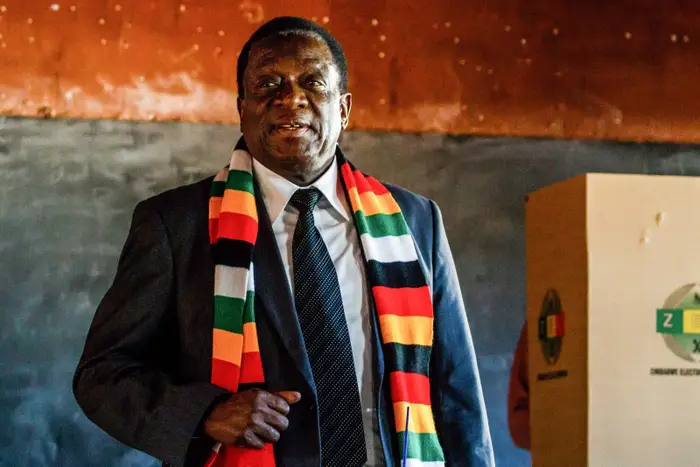
Zimbabwe is entering a deeply dangerous political moment where decisions being made in the name of constitutional reform may carry consequences far beyond parliament. What is being presented as a legal and political process is, in reality, a risky gamble with the country’s fragile stability. The growing push to extend President Emmerson Mnangagwa’s time in power is not creating confidence. It is creating fear, tension, and uncertainty across the political landscape. When leaders begin reshaping the rules of power for political survival, the nation moves into dangerous territory.
Even the thought of instability at the highest levels of the state should alarm every Zimbabwean. No responsible citizen wants a nation pulled toward political breakdown. But the current path being taken is increasing the pressure inside an already fragile system, and warning signs are becoming harder to ignore.
Across Southern Africa, there appears to be growing quiet discomfort among former liberation movements that have historically shared political ties with ZANU PF. Publicly, many of these parties continue to speak the language of sovereignty and non interference. But beneath official statements, there is increasing awareness that leadership renewal is essential for political survival. Parties that have remained in power for decades understand that refusing renewal creates dangerous internal tensions.
South Africa’s African National Congress has experienced leadership transitions and understands that no political era lasts forever. FRELIMO in Mozambique has also moved leadership across generations, while SWAPO in Namibia has managed succession with relative stability. Even Tanzania’s ruling party has continued leadership changes, despite its own political shortcomings. None of these movements are calling for regime change in Zimbabwe, but there appears to be little enthusiasm for a strategy built around political stagnation.
That should matter to Zimbabwe because regional perception affects political confidence, diplomacy, and economic relationships.
The proposed constitutional changes carry serious risks. Instead of calming the political environment, they may deepen divisions inside ZANU PF itself. Succession tensions are already visible. Extending presidential power does not remove those tensions. It intensifies them. It simply delays the inevitable question of leadership transition while making the eventual struggle even more unpredictable.
President Mnangagwa’s age has also become part of the wider political discussion. Whether one accepts official figures or political speculation, the reality is that leadership succession cannot be avoided forever. Trying to solve political uncertainty by extending power often creates even greater instability.
Warnings have already emerged from within political circles. Comments from senior voices suggest that even within the establishment, there is recognition that leadership transitions must eventually happen. History has shown what happens when aging leadership becomes politically untouchable. Institutions weaken, uncertainty grows, and political systems become increasingly unstable.
The parliamentary battle over this proposed bill adds another layer of uncertainty. Parliament is supposed to act as a safeguard against executive overreach. It is meant to provide scrutiny, balance, and accountability. But serious questions remain about whether that role is functioning properly.
The mathematics in the Senate creates an interesting possibility. ZANU PF does not automatically control the full numbers required without support beyond its core base. In theory, enough votes exist to block the proposed bill if opposition voices, traditional leaders, and independent actors choose to resist.
But theory and political reality are not always the same in Zimbabwe.
Political pressure, party loyalty, institutional capture, and personal interests often shape parliamentary behaviour. Opposition representation has already been weakened through recalls and political disruption. Traditional leaders are widely seen as politically influenced. In such an environment, parliamentary independence becomes deeply uncertain.
There is also the uncomfortable truth that some lawmakers may support political extension not because they believe it serves the country, but because it protects their own positions, influence, and benefits.
That is what makes this moment so dangerous.
When constitutional reform becomes about political survival instead of national interest, democratic institutions lose credibility. When succession becomes a battlefield instead of a managed transition, national stability is threatened.
Zimbabwe stands at a crossroads. The choices made now will shape not just one presidency, but the future direction of the entire nation.

Ah please 😭 some of these same war veterans helped build this exact political culture and now they want to sound like guardians of democracy? Comedy.
True, but insiders breaking ranks still matters. Systems usually don’t crack because outsiders complain. They crack when insiders stop agreeing.
“Regional discomfort” 😂 since when did SADC suddenly become defenders of democracy? Those same parties protect each other all the time. Let’s not romanticise them.
Not gonna lie, this whole thing feels bigger than what’s being said publicly. Too many strange signals from different corners. Something is definitely brewing.
The thing people ignore is internal ZANU PF tension. Extending one man’s political timeline doesn’t remove succession conflict. It usually makes it worse because ambition doesn’t disappear, it just goes underground. That’s when systems become unpredictable.