GEORGE CHARAMBA’S DOUBLE GAME EXPOSES ZANU PF’S DEEP CRACKS
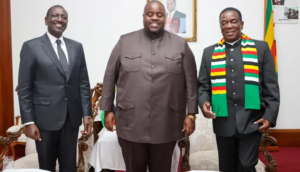
George Charamba has survived Zimbabwean politics for many years, not because of clear loyalty, but because of his ability to adapt, shift, and remain useful to whoever holds power. He has become one of the most recognisable voices defending those at the top of government, but his political story has never been simple. Today, he officially serves President Emmerson Mnangagwa, speaks for the presidency, and repeats government messaging with confidence. But many believe his deeper political ties remain with Vice President Constantino Chiwenga. That dangerous balancing act is not new. It is a pattern that has followed him for years, and once again it is exposing the serious divisions inside ZANU PF.
This same political game was visible during the Robert Mugabe years. Charamba operated around powerful figures while trying to maintain influence across different camps. That strategy eventually brought public embarrassment when former First Lady Grace Mugabe openly attacked him for trying to play both sides. One would think that such humiliation would teach caution. Yet here we are again, watching the same political drama unfold with different names but the same dangerous tension.
Charamba recently tried to dismiss growing speculation about a split between Mnangagwa and Chiwenga through social media comments that mocked public concern and insisted there was no crisis. But his own explanation created more questions than answers. Instead of calming public fears, his long defence seemed to reveal just how much anxiety exists within the ruling party.
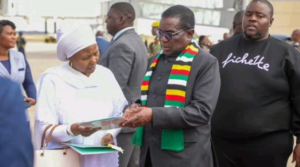
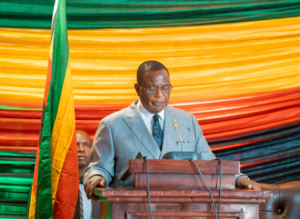
He pointed to moments at a recent ZANU PF conference as proof of unity. According to his own description, Mnangagwa made gestures that appeared to favour Chiwenga. One moment involved the president turning to Chiwenga’s wife for help with pronunciation instead of relying on other senior leaders present. Another involved Mnangagwa handing over the closing proceedings of the day to Chiwenga. Charamba presented these as signs of strength and unity.
But Zimbabwean politics does not work in simple ways. In ZANU PF, symbols matter. Public gestures matter. Who stands where, who speaks when, who is acknowledged, and who is ignored all carry meaning. When a ruling party is already under pressure from succession battles and internal mistrust, these moments become politically important.
Charamba’s effort to explain these events in great detail only made the situation appear more fragile. If unity were truly strong and natural, there would be no need for such forceful public defence. Strong alliances do not usually require repeated explanations. Real political confidence speaks for itself.
He also praised the supposed shared commitment between Mnangagwa and Chiwenga on corruption, party unity, and Vision 2030. But for many Zimbabweans, these words ring hollow. Citizens hear speeches about fighting corruption while watching politically connected figures continue to enjoy wealth and influence. They hear promises of national progress while facing daily hardship, economic pressure, and political frustration.
This is why official political messaging no longer easily convinces ordinary people. There is a growing gap between political language and lived reality.
Charamba ended his defence by insisting that he was present and personally witnessed the events being discussed. But being physically present does not always mean understanding the full political game at work. Political insiders often see the performance, but even they may not fully understand the deeper calculations behind it.
What this episode really exposes is a ruling party under strain. ZANU PF continues to face internal pressure over succession, power, and control. The tension between major political figures remains a matter of public interest because Zimbabwe’s future could be shaped by those rivalries.
George Charamba may believe he is managing the message. But his words may have done something else entirely. They may have revealed that beneath the official smiles and carefully managed appearances, serious cracks remain inside the ruling party.
And when ZANU PF cracks, Zimbabwe often pays the price.