WHEN LEADERS FEAR LEAVING POWER, DEMOCRACY IS IN DANGER
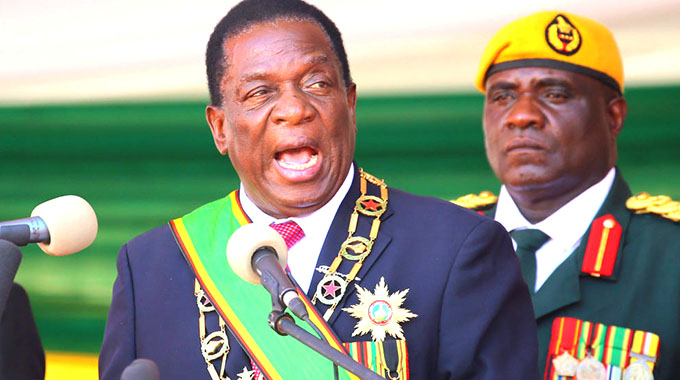
Zimbabweans are once again being forced to watch a political drama that has nothing to do with solving the real problems crushing ordinary lives. At a time when families are battling hunger, unemployment, collapsing public services, and endless economic pressure, national political energy appears increasingly focused on one question. How can power be preserved for longer. That question alone should trouble every citizen who believes leadership exists to serve the people rather than to protect itself.
The language being used may sound technical, strategic, or even patriotic. Supporters may speak of continuity, stability, national protection, or unfinished work. But ordinary citizens understand a much simpler truth. When leaders begin discussing ways to stay beyond expected constitutional limits, public trust naturally begins to weaken.
Democracy depends on predictable rules.
Term limits are not meaningless decorations placed inside constitutions for appearance. They exist because power, left unchecked, naturally seeks to grow. They create discipline. They force leadership renewal. They remind those in office that public authority is temporary, borrowed from citizens rather than permanently owned.
Once that principle begins to weaken, the entire democratic structure becomes vulnerable.
A leader who respects constitutional democracy does not look for creative pathways around public expectation. Leadership is not proven by finding ways to stay longer. It is proven by respecting institutions, even when doing so requires surrendering power.
That is the true test of democratic maturity.
Some voices argue that constitutional rules no longer matter because they have already been weakened or ignored in the past. That reasoning is deeply dangerous. If repeated abuse becomes an excuse for abandoning standards entirely, then law loses all meaning. Wrong becomes normal simply because it has happened before.
That is how institutional collapse begins.
The constitution matters not because it has always been perfectly respected, but because it remains the standard by which abuse is measured. Without constitutional principles, citizens lose the language to challenge overreach. Power becomes self justifying. Accountability becomes optional.
Zimbabwe’s current reality makes this debate even more urgent.
This conversation is not taking place in a prosperous, stable, confident democracy where institutions are strong and public trust is healthy. It is happening in a country where hospitals struggle, young people face bleak economic prospects, teachers and workers continue to face hardship, informal survival dominates daily life, and millions rely on fragile coping systems to endure.
Against that backdrop, efforts focused on extending political power create understandable public anger.
Citizens are asking obvious questions.
Will longer presidential tenure lower food prices.
Will it create jobs.
Will it repair broken hospitals.
Will it restore trust in institutions.
Will it strengthen electoral confidence.
Or does it mainly solve political anxiety inside elite circles.
That distinction matters.
Because if constitutional change appears designed primarily to reduce leadership uncertainty rather than improve public life, democratic legitimacy becomes weaker.
This is not merely a technical legal argument.
It is a moral political question.
Does power belong to the people, temporarily entrusted to leaders through constitutional rules.
Or does power gradually become something leaders believe they own until forced to surrender it.
History offers a clear warning. Power rarely limits itself voluntarily once restraint begins to weaken. What starts as a small exception can become a larger pattern. Once constitutional limits become negotiable, future boundaries become easier to challenge.
That is why vigilance matters.
Democratic resistance does not mean violence, instability, or chaos. It means lawful public engagement, constitutional scrutiny, institutional courage, and citizens refusing to become passive observers while democratic safeguards are weakened.
Courts matter.
Parliament matters.
Civil society matters.
Public voices matter.
Silence is what allows constitutional drift to become political reality.
Zimbabwe stands at an important moment.
This is bigger than one leader, one party, or one election cycle.
It is about whether constitutional democracy remains stronger than political ambition.
Because once citizens accept a culture where leaders determine how long they stay, democracy becomes something performative rather than real.
And recovering what is lost becomes far harder than defending it in the first place.
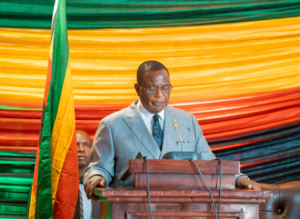

Can longer presidential term fix potholes that couldnt be fixed in the last 5 years? Asking for a nation.
The real issue isn’t even Mnangagwa personally for me. It’s precedent. Once a country normalises adjusting constitutional expectations around incumbent convenience, that logic doesn’t disappear with one administration. Future leaders inherit the same political culture. That’s how institutional decay becomes permanent. A democracy becomes less about rules and more about whoever has enough influence to reinterpret them. That’s why citizens should care even if they support the current leader. Precedent outlives personalities.
Some of you talk like term limits are holy scripture. Constitutions can evolve. Laws are made by humans, not heaven.
Yes constitutions evolve. But “evolution” that benefits sitting power is exactly why people worry.
The strongest line here is the distinction between constitutional democracy and performative democracy. Elections alone do not make a system democratic if the underlying safeguards meant to regulate power become politically negotiable. Democracies survive because institutions constrain ambition, not because leaders voluntarily behave well forever. Once constitutional limits start looking flexible depending on political circumstances, legitimacy begins to weaken even before any formal change happens. Public trust is fragile. And once citizens believe constitutional rules are merely suggestions for the powerful, democratic culture itself suffers.
One thing I’ve learned is that democratic decline rarely feels dramatic at first. People imagine tanks, emergency decrees, chaos in the streets. But often it starts with boring legal debates most ordinary people ignore because survival takes priority. Then gradually exceptions become normal. Then public expectations shift. Then institutions become weaker without anyone clearly noticing the exact turning point. That’s why constitutional vigilance matters even when the debate feels technical or repetitive. Sometimes the boring stuff is where the biggest political shifts happen.