LAWLESSNESS IS DRIVING ZIMBABWE’S ECONOMY INTO THE GROUND
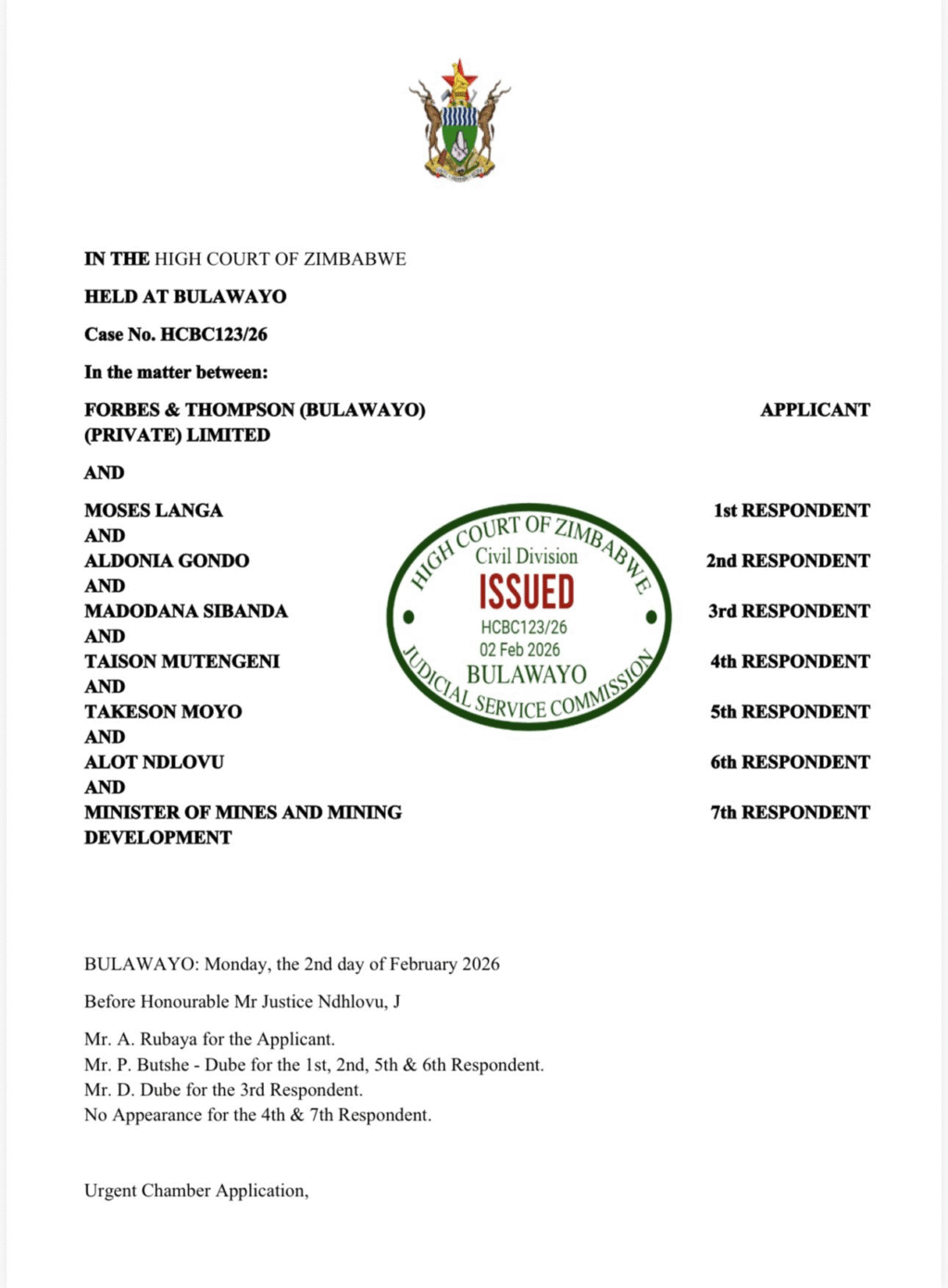
Zimbabwe has once again been given a painful reminder of how dangerous lawlessness has become in a country where political influence too often appears stronger than legal order. The recent events at Vubachikwe Mine in Gwanda have raised serious concerns not only about property rights, but also about investor confidence, job security, and the wider direction of the national economy. When a private mining operation becomes the target of forceful occupation, the issue is far bigger than one local dispute. It becomes a warning about the state of governance itself.
The High Court in Bulawayo was forced to intervene after a group linked to ZANU PF youth structures reportedly entered Vubachikwe Mine and took control of operations without lawful authority. Justice Bongani Ndlovu issued a spoliation order requiring those involved to leave the mine immediately and stop interfering with its activities. In legal terms, such an order exists to quickly restore possession to the lawful holder when property has been taken by force or without proper legal process. The fact that such emergency intervention became necessary tells its own troubling story.
The named individuals reportedly accepted before the court that their actions had no legal basis and agreed to remove themselves along with the large number of illegal miners brought onto the site. That admission alone should concern every Zimbabwean who cares about the rule of law. In any functioning economy, disputes over property, operations, or access are handled through lawful channels, not through force, intimidation, or occupation.
Vubachikwe Mine is not an abandoned symbolic site with no national importance. It forms part of a recognised mining lease held by Forbes and Thompson, a subsidiary of Duration Gold Limited, a company with a long history of mining investment in Zimbabwe. The mine has operated for decades and remains part of a sector that is critical to national economic survival.
Mining continues to be one of Zimbabwe’s most important economic sectors. It provides employment, export earnings, and one of the few remaining areas where investor confidence can still generate national opportunity. That is precisely why incidents like this are so damaging. Investors do not study political speeches alone. They watch what happens on the ground. They observe whether property rights are respected, whether contracts are meaningful, and whether the courts must constantly step in to reverse acts of force.
No serious investor wants to place money in an environment where politically connected actors appear able to interfere with operations outside legal structures.
The silence of state institutions in such situations also raises uncomfortable questions. Reports that the Ministry of Mines did not oppose the legal application may suggest official awareness that the occupation lacked legal standing. Yet awareness after the fact is not the same as preventing lawlessness before it happens.
Zimbabwe’s broader economic challenges make this even more serious. The country needs jobs, capital, production, and stability. Communities surrounding mines often depend heavily on those operations for livelihoods. When mining activity is disrupted by disorder, it is not only corporate interests affected. Workers, families, local suppliers, and entire communities can suffer the consequences.
This case also highlights a deeper national concern about consistency in the application of law. Public trust weakens when citizens believe political identity changes how rules are enforced. Economic confidence weakens when legal certainty appears conditional.
The court’s intervention restored immediate order in this case, but the wider national questions remain unresolved. Emergency legal remedies can address individual incidents, but they do not by themselves rebuild investor trust or restore confidence in governance.
Zimbabwe cannot rebuild its economy while uncertainty surrounds the protection of lawful business activity. Economic recovery depends on predictability, legal order, and institutions that protect rights consistently.
The Vubachikwe case is not simply about one mine in Gwanda. It is about whether Zimbabwe can offer an environment where law matters more than influence, where business disputes are resolved properly, and where national development is protected instead of disrupted.
Until that confidence is restored, economic recovery will remain fragile, and ordinary Zimbabweans will continue paying the highest price.