THE QUIET CONSTITUTIONAL TRICK THAT COULD ROB ZIMBABWEANS OF THEIR VOTE
One of the oldest tricks in politics is to hide dangerous power grabs inside complicated legal language that ordinary citizens are too busy or too exhausted to study line by line. That is how democratic rights are often stolen, not always through dramatic announcements, but through technical sounding clauses presented as harmless adjustments. Zimbabweans must pay close attention whenever constitutional language is being used to change the balance of power, because history has shown that some of the biggest political shifts begin with words that appear innocent.
At the centre of current public concern is the dangerous relationship between the presidency and parliament when constitutional timing rules are manipulated. The issue may sound technical, but its consequences are deeply political. If the life of parliament can be stretched, and if presidential tenure is tied to parliament’s life, then citizens must ask an obvious question. Does that create a path for leaders to stay longer without directly asking the people for a fresh mandate?
That concern is not imaginary.
Earlier constitutional structures contained wording that clearly linked presidential tenure to the life of parliament. In practical terms, this meant that if parliament’s life was lawfully extended under certain circumstances, the presidency could continue alongside it. That kind of constitutional design creates a dangerous political possibility. What appears to be a parliamentary adjustment can become a presidential extension.
That is why constitutional wording matters.
Zimbabwe’s current constitutional framework continues to connect presidential timing and parliamentary cycles. The presidency and parliament remain linked through the electoral calendar and coordinated timing provisions. Defenders of the current system may argue that these are merely structural clauses meant to ensure orderly governance, not tools for dictatorship. On paper, that argument may appear reasonable.
But political systems are not judged only by what legal language says in theory. They are judged by how power behaves in practice.
A clause may not be officially labelled a term limit provision, but if it creates a practical route for extending time in office, citizens have every right to worry. Democratic accountability is not protected by technical definitions alone. It is protected by political honesty and constitutional restraint.
This is especially important in Zimbabwe, where constitutional amendments have historically played major roles in reshaping political power. Zimbabweans have seen how legal changes can be presented as administrative reform while producing major political consequences. That history explains why public suspicion is so high whenever constitutional language begins shifting around leadership timelines.
The principle ordinary citizens understand is much simpler than the legal arguments.
If a leader is elected for five years, then five years should mean five years.
Citizens vote with the expectation that political power has limits. Elections are not symbolic ceremonies. They are how democratic consent is renewed. Once politicians begin treating timing rules as flexible tools instead of democratic commitments, trust in the entire constitutional order begins to weaken.
The danger becomes even greater when citizens feel excluded from the process. Technical debates among political elites, lawyers, and party strategists can easily become mechanisms for removing public participation from decisions that directly affect national leadership.
That is why constitutional vigilance matters.
This is not just about legal interpretation. It is about democratic ownership. A constitution belongs to the people, not to whichever government happens to control parliament at a given moment.
Zimbabweans should always be cautious when leaders present constitutional change as routine housekeeping. Sometimes administrative language hides political ambition. Sometimes phrases that look harmless create future openings for abuse.
Democracy is not lost only through open dictatorship. Sometimes it is weakened quietly through carefully drafted provisions, strategic reinterpretation, and gradual normalisation of exceptions.
The simple democratic principle remains clear.
Leadership terms should be respected.
Election timelines should not become political bargaining tools.
Parliament should not become a mechanism for weakening public choice.
And constitutional language should protect citizens, not create opportunities for power to stretch itself beyond the people’s consent.
Zimbabwe’s democratic future depends not only on what is written in law, but on whether citizens remain alert when those in power begin playing games with the meaning of time itself.
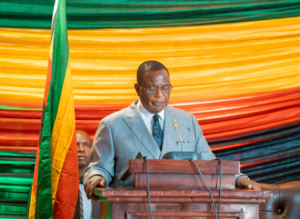

This is bigger than one politician. Bigger than 2028. Bigger than ZANU PF even. Once people stop trusting constitutional processes, rebuilding that trust takes decades. Institutions collapse long before countries officially admit there’s a crisis.
The scary part is how ordinary this starts to sound. First it’s interpretation. Then special circumstances. Then national stability. Then suddenly elections are optional. That’s how democratic erosion happens. Slowly. Quietly. Step by step until everyone wakes up too late. People think democracy only dies dramatically. It doesn’t. Sometimes it dies through polite legal memos and televised press conferences.