ZIMBABWE CANNOT BE RULED LIKE A SECRET MILITARY CHESSBOARD
Zimbabweans have lived for too long under a political system where power appears to move through hidden deals, factional struggles, and security calculations instead of open democratic accountability. The rise of powerful intelligence and military figures inside national politics has become one of the clearest signs of how deeply governance has been shaped by internal power battles rather than public service. While ordinary citizens struggle with poverty, unemployment, collapsing services, and political frustration, those at the top appear locked in constant survival battles.
One figure increasingly discussed in these conversations is Tapfumaneyi, whose political and security journey reflects the deeper tensions inside Zimbabwe’s ruling system. His movement through state institutions shows how power in Zimbabwe is often less about stable governance and more about strategic positioning inside elite political struggles.
After leaving the Central Intelligence Organisation in 2009, he moved through other important state roles, including positions connected to executive government and war veterans affairs. But his later return to the intelligence system after the political changes of 2017 placed him back at the centre of national power calculations. Zimbabwe’s post 2017 political order was never simply about leadership change. It created new alliances, new rivalries, and a fresh battle over succession.
From the beginning, tensions between competing centres of power were visible.
Reports suggest that his relationship with Vice President Constantino Chiwenga was difficult, shaped by mistrust and competing political loyalties. In a political environment already divided by old factions, internal suspicion became part of the landscape. In Zimbabwe, political history does not disappear when leadership changes. Old alliances, rivalries, and factional memories often remain alive beneath official appearances.
As time passed, his role reportedly became more closely associated with President Emmerson Mnangagwa’s internal political security network. That matters because Zimbabwe’s ruling structure has increasingly appeared shaped by concerns about political survival rather than institutional stability.
The 2023 elections intensified those concerns. Public debate around election credibility, political pressure, and allegations of manipulation deepened existing tensions. In such an atmosphere, security aligned political operations naturally become matters of national controversy.
The growing fallout between competing elite camps appears to have hardened over time. Stories of internal mistrust, political purges, and strategic repositioning have become common features of Zimbabwe’s political discussion. Whether every rumour proves accurate is less important than the wider reality they reflect. Public confidence in stable national leadership has been badly weakened.
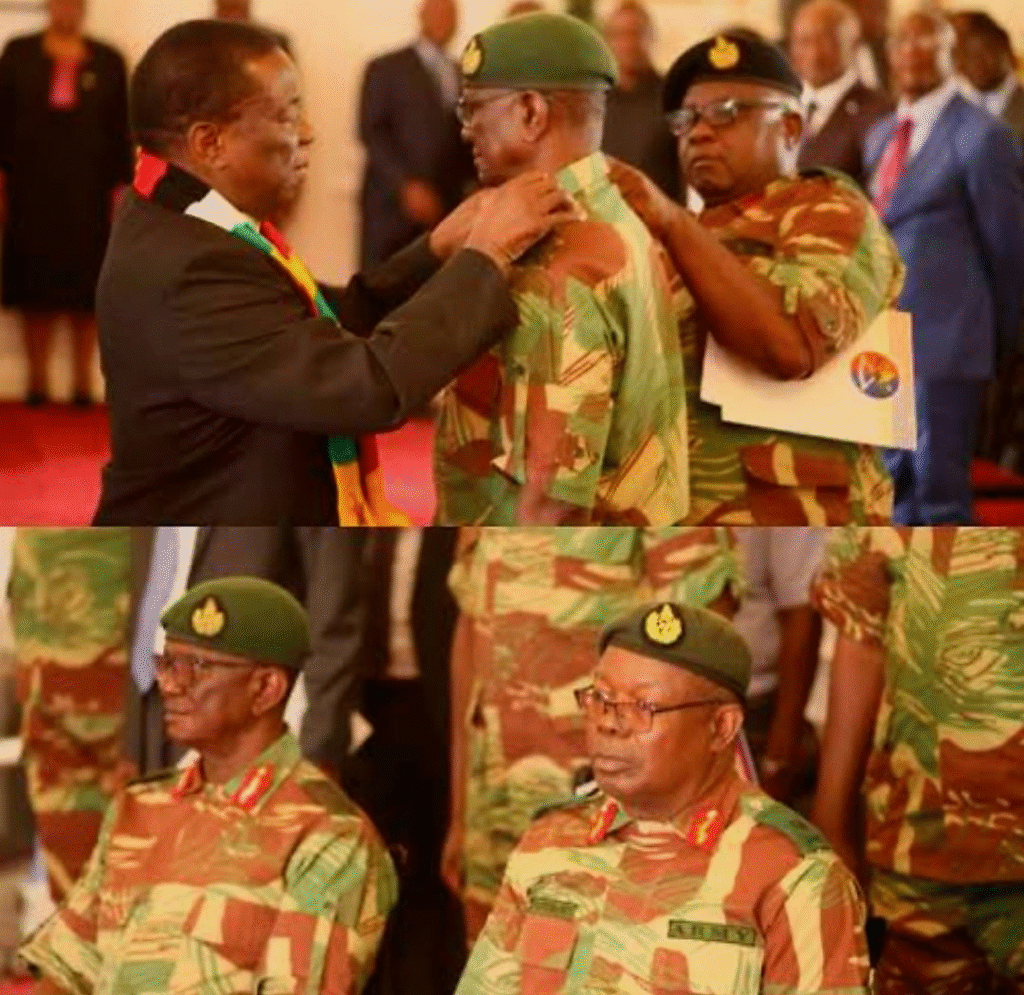
The military reshuffles that followed added to public anxiety. Promotions inside armed structures should ideally reflect professional service, institutional merit, and national defence priorities. But when appointments are widely interpreted through political loyalty rather than military professionalism, trust in national institutions becomes weaker.
That is a dangerous development.
A military exists to defend the nation, not to become a visible instrument in succession struggles.
Zimbabwe’s political history makes this issue especially sensitive. The relationship between the military and political power has long shaped national outcomes. Since independence, moments of major political change have repeatedly involved security institutions in direct or indirect ways. That legacy means citizens are right to be concerned whenever military movements appear tied to internal political calculations.
Meanwhile, ordinary Zimbabweans continue to bear the real cost of elite power struggles.
Families are not asking who wins factional battles.
They are asking how to survive.
They are asking why hospitals struggle.
Why jobs remain scarce.
Why political uncertainty never seems to end.
Why national institutions increasingly appear shaped by power preservation instead of public accountability.
A country cannot build democratic confidence when governance feels like a contest between hidden power centres.
Zimbabwe deserves transparent institutions, civilian political accountability, and a state that serves citizens rather than elite survival strategies.
The nation cannot continue operating under a political culture where every appointment, promotion, and institutional movement is interpreted through fear, suspicion, and succession warfare.
Because when governance becomes dominated by secret calculations instead of public legitimacy, democracy weakens.
And when democracy weakens, ordinary citizens always pay the price.
Zimbabwe needs leadership grounded in openness, constitutional accountability, and national service.
Not endless power games played in the shadows while the country waits for real change.