THEY WANT TO STEAL MORE TIME
Zimbabweans need to understand what is happening before the usual political noise buries the truth. This is not some harmless legal adjustment being prepared quietly in government offices. This is not constitutional housekeeping. This is not about improving governance. What is being prepared is a direct attempt to stretch political power beyond where the constitution intended it to end, and like every dangerous political project, it is being dressed up in technical language so ordinary citizens feel confused, tired, or too intimidated to challenge it.
A draft Constitutional Amendment Bill Number 3 is reportedly close to being gazetted, and that should alarm every Zimbabwean who still believes the constitution means something. Once a constitutional amendment enters the formal legal process, this stops being rumour and becomes a real national fight. These things do not happen by accident. Drafting takes planning. Legal review takes coordination. Cabinet discussion takes political intention. Nobody wakes up one morning and accidentally prepares constitutional amendments around presidential tenure. This is deliberate.
And let us stop pretending we do not understand the target here.
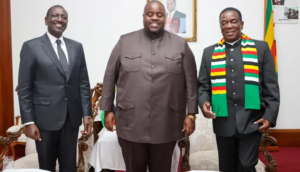
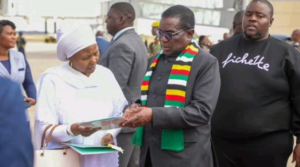
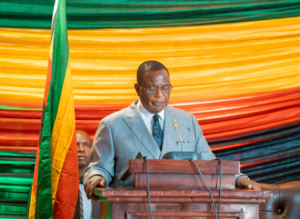
This is about Emmerson Mnangagwa.
It is about keeping one man in power longer than the political arrangement Zimbabweans were told existed. Everything else is decoration.
The insulting part is how this is likely to be sold. We will hear clever legal arguments. We will be told this is not technically a term limit issue. We will hear phrases about constitutional alignment, governance reform, structural adjustment, legal interpretation, continuity, national interest. Zimbabweans have heard this kind of language before. Political theft in this country is rarely announced honestly. It arrives wearing a suit and carrying legal paperwork.
But changing how long a president remains in power is not some harmless technical discussion. Ordinary people are not stupid. If a leader expected to leave under one constitutional arrangement suddenly stays longer because the rules have been adjusted while he is already in office, then the public sees exactly what that is.
A power grab.
That is the plain language.
And what makes it worse is the timing. Zimbabwe is not a country enjoying peace, prosperity, and strong democratic trust where constitutional reform can be discussed calmly as an academic exercise. This is a wounded country. People are tired. Hospitals are failing. Teachers are struggling. Young people survive through hustling, migration, and family remittances. Families are surviving, not living. In the middle of that national pain, political elites appear focused on extending power at the top.
That tells you everything.
A government serious about the people would be obsessed with jobs, healthcare, wages, electricity, corruption, and restoring trust in public institutions. A government obsessed with extending leadership timelines is solving a different problem entirely. Its own political insecurity.
And that is what should worry people most. Because when leadership becomes focused on staying rather than serving, every institution around it starts bending. Parliament becomes a numbers game. Legal arguments become political tools. Public consultation becomes performance. Citizens are treated like spectators in decisions that shape their future.
Some Zimbabweans may feel powerless. That is understandable. Many have seen so much political abuse that exhaustion now feels normal. But this is exactly how constitutional erosion works. Not always through tanks. Not always through violence. Sometimes through paperwork, procedural language, and public fatigue.
People switch off.
And that is when dangerous things pass.
This is bigger than Mnangagwa. Bigger than ZANU PF. Bigger than one amendment.
It is about whether Zimbabwe remains a country where the law limits power, or a country where power rewrites the law whenever it feels threatened.
Because once leaders discover they can move constitutional goalposts for convenience, they do not suddenly become restrained.
They ask for more.
Zimbabweans should not be polite about this.
They should be alert. Loud. Organised. Angry if necessary.
Because rights are rarely stolen in one dramatic moment.
They are usually taken piece by piece while people are told to stay calm.