ZIMBABWE’S POWER STRUGGLE HAS EXPOSED A DANGEROUS THREAT TO DEMOCRACY
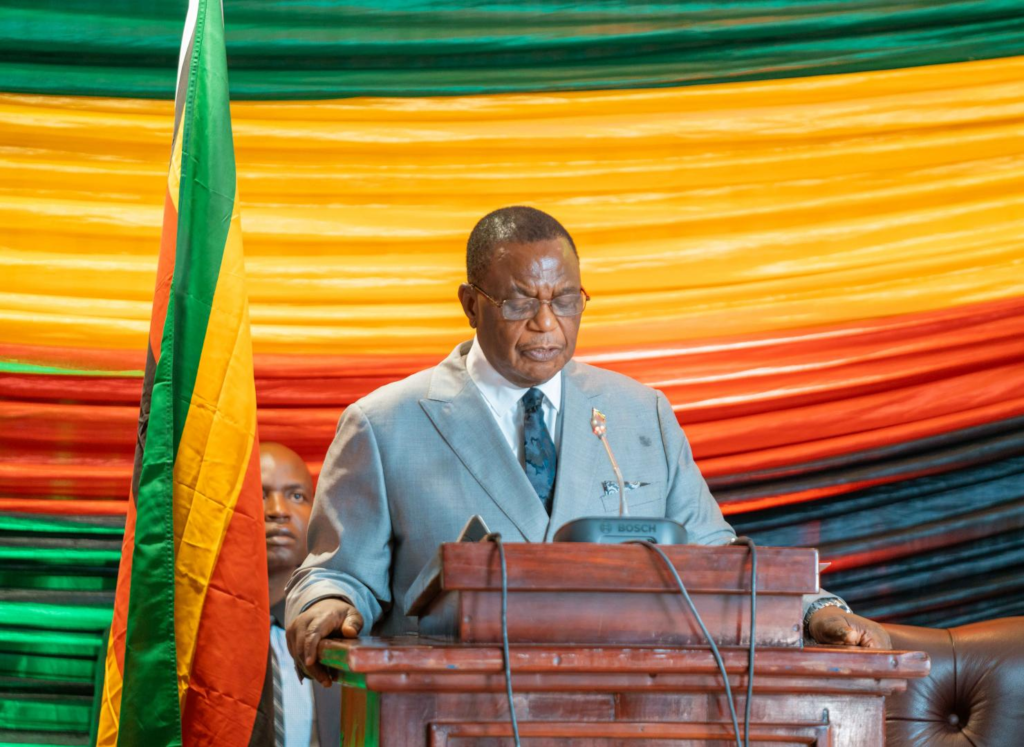
Zimbabwe is now facing a dangerous political turning point where the battle over Constitutional Amendment Bill Number 3 has grown into something far bigger than a normal political disagreement. What is unfolding is not simply a debate about law or governance. It is a fight over the future of the country, the meaning of democracy, and whether ordinary Zimbabweans will continue to have the power to choose their own leaders. The growing cracks inside the ruling elite have now made it clear that even those within the system understand how dangerous this path has become.
Vice President Constantino Chiwenga has quietly begun placing himself against President Emmerson Mnangagwa’s push to remain in power until 2030. While many see this as a normal succession fight inside ZANU PF, it carries a deeper political message. It suggests that even within the ruling establishment, there is growing recognition that the current political direction is unstable, risky, and difficult to defend.
Chiwenga’s political messaging has not been random. It has been carefully chosen. He has rooted his argument in the liberation struggle, the very story ZANU PF has long used to justify its rule. By speaking about land and the principle of one man one vote, he is making a direct political challenge to the proposed constitutional changes. That language matters because it connects current political battles to Zimbabwe’s foundational promises.
One of the most controversial elements in the debate is the proposed shift away from direct presidential elections toward a system where parliament chooses the president. Supporters of this plan argue that similar systems exist in other countries and that indirect election does not automatically remove democratic legitimacy. But this argument ignores Zimbabwe’s political reality.
Zimbabwe does not operate in a politically neutral environment where parliament acts freely and independently. Parliament has long been shaped by political pressure, party control, recalls, and institutional influence. In such a system, moving the power to choose a president from citizens to parliament is not a harmless technical reform. It is a major transfer of power away from ordinary people.
That is why Chiwenga’s support for direct presidential elections carries political weight. Whatever his personal motives may be, the principle itself matters. Citizens choosing their president directly creates a stronger link between leadership and public accountability. Removing that power weakens democracy and pushes Zimbabwe backward.
The demand for a referendum has become another major point of conflict. Those pushing the amendments argue that no referendum is necessary because they claim term limits are not being removed, only the structure of governance and election timing are being adjusted. But many Zimbabweans will see that argument as misleading.
When a constitution is being changed in ways that extend a leader’s time in power and alter how future leaders are chosen, the political contract between citizens and the state is being fundamentally changed. Such decisions should not be made behind parliamentary numbers alone. They should be taken directly to the people.
The refusal to allow a referendum creates a simple but troubling question. If these changes are truly in the national interest, why fear the people’s verdict?
Zimbabwe’s own history makes this moment even more striking. At independence, the country began with a parliamentary system under the Lancaster House arrangement. Executive power was structured differently. Over time, constitutional changes centralised power under an executive presidency, concentrating authority and weakening important checks.
Now, what is being presented as reform looks less like democratic evolution and more like political engineering designed to protect power.
Perhaps the most important signal is where resistance is now coming from. Opposition groups and civic voices have raised concerns, but now even insiders are showing discomfort. That matters because systems rarely begin to crack from outside pressure alone. Real instability begins when those inside start pulling in different directions.
This does not make any individual a democratic hero. But it shows how serious this proposal has become.
Zimbabwe stands at a defining crossroads. This is not simply a battle between political figures. It is a battle over whether the people will remain central to democracy or be pushed further to the edges while power concentrates at the top.
That choice will shape Zimbabwe for years to come.

This is bigger than ZANU PF factional politics. The real issue is whether Zimbabweans will still have the right to choose their president directly. Once power is moved from the people to Parliament in a system already controlled by party pressure, democracy becomes a performance. Citizens must pay attention because constitutional changes made today will affect generations.
People must stop pretending every constitutional reform is a conspiracy. Governance systems evolve. If Parliament chooses the president through constitutional processes, that is still democracy. The real problem is that critics do not trust institutions unless outcomes favour their politics. Thesd fake activists who are working to gain Western validation and receive grants will say anything even if they have no proof.
You are pathetic.
The question is simple. If these proposed changes are really good for Zimbabwe, why are leaders afraid of a referendum? Let the people decide. A constitution belongs to citizens, not politicians. Any attempt to make major political changes without direct public approval will always look like a power grab.
Chiwenga is not defending democracy. He is defending his own succession ambitions. Let’s not pretend this is about citizens’ rights. This is just another ZANU PF internal power struggle being dressed up as constitutional principle. Zimbabweans should not be manipulated by factional politics. A referendum is not automatically required for every constitutional adjustment. Parliament exists for lawmaking. That is literally its role. People complaining now would be silent if reforms supported their preferred political outcomes. Constitutional debate should be based on law, not emotional activism.