THEY WANT APPLAUSE FOR DECLINE
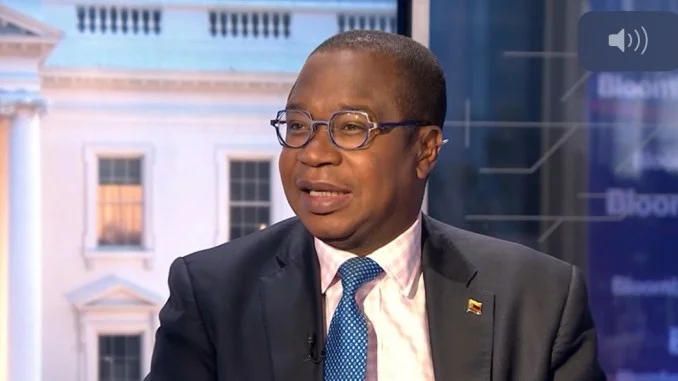
There is something deeply strange about leaders asking people to celebrate decline as if it were progress. Only in a badly run country can those in power stand proudly before suffering citizens and announce numbers that mean very little to ordinary life, then expect applause. Zimbabweans are being told the economy is growing, that the country is now one of the biggest in the region, that new figures show progress, and that this should somehow make people feel hopeful. But ordinary people are not living inside reports. They are living inside reality.
And reality feels nothing like victory.
The real insult is not even the numbers themselves. It is the political memory they hope people have forgotten. Zimbabwe was not some hopeless little country crawling from the bottom. This was once one of the strongest economies in the region, with working factories, productive farms, rail systems that moved, industries that employed people, and a level of infrastructure many neighbours respected. People worked. Families planned futures. Manufacturing meant something. Agriculture meant something. The country produced, exported, built, and functioned in ways younger Zimbabweans can barely imagine now.
So when politicians behave as though reaching fifth place in a regional ranking is some kind of national triumph, citizens are entitled to ask a very uncomfortable question.
Fifth from where.
Because if you fall from strength into decline, then partial recovery does not erase the fall.
That is what makes the celebration feel dishonest.
Economic numbers can always be arranged into neat political stories. GDP can grow while inequality deepens. National figures can improve while ordinary families become poorer. Technical economic expansion does not automatically mean human wellbeing. A headline number means very little to the mother sitting in a hospital with no medicine, to the graduate selling airtime at a street corner, or to the worker whose salary dies before the month does.
Zimbabweans understand this instinctively because they live it.
This is why official economic boasting increasingly sounds disconnected from real life.
If the economy is doing so well, why are so many young people desperate to leave.
Why are remittances keeping families alive.
Why do small businesses operate in survival mode.
Why does power instability remain part of daily life.
Why does public infrastructure continue to decay.
Why does currency confidence remain fragile.
These are not abstract policy questions. They are everyday lived experience.
And that is where political frustration grows. Because people are not stupid. They know when statistics are being used as emotional distraction. They know when leaders are pointing at numbers while asking citizens to ignore what is happening around them.
Nobody denies that economies can change over time. Rankings move. Regional competitors grow. Global conditions shift. But leadership should be honest enough to acknowledge context instead of marketing decline as triumph.
That honesty is what feels missing.
A serious government would say yes, there are areas of measurable economic movement, but we understand the public still feels pain, and we are focused on translating economic performance into visible improvements in daily life.
That would sound credible.
Instead, citizens often hear triumphal language while their lived experience says something else entirely.
And that gap between official storytelling and public reality is politically dangerous.
Because once people stop trusting economic narratives, even legitimate progress becomes harder to believe.
Zimbabwe does not need performance speeches.
It needs functioning systems.
Reliable healthcare.
Strong schools.
Working infrastructure.
Job creation.
Stable money.
Industrial recovery.
Public confidence.
That is how ordinary people measure economic success.
Not by hearing billion dollar figures while their own household situation remains unchanged.
A country cannot keep asking suffering citizens to clap for macroeconomic claims while microeconomic pain defines everyday life.
Zimbabweans remember what this country once was.
That memory is exactly why many refuse to celebrate too quickly when politicians present decline dressed as achievement.